
BUILDING RESILIENCE LEADERSHIP PROGRAM

Building Resilience

Equip leaders to stay effective under pressure and build resilience in themselves and their teams
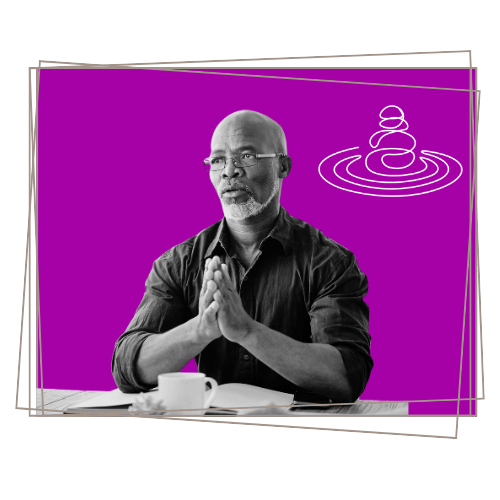
Building Resilience leadership program: an older leader with a gray beard sits at his desk with hands pressed together, looking calm and composed, beside an illustration of balanced stones.

Help leaders stay steady under pressure

The impact of change is accelerating across all fronts: more frequent, greater magnitude, and in multiple ways from technological to organizational to cultural to generational and more.

This program gives leaders practical tools to manage their own response in high-pressure moments and to help their teams do the same, so a demand becomes a challenge to meet rather than a threat to get through.


Audience
Frontline and midlevel managers leading teams under sustained pressure
Length
4-week learning journey,
flexible options
Live learning
4 hours
Cohort size
24 to 30 participants

PARTICIPANT FEEDBACK
"While I already had some experience in this area, and think of myself as pretty resilient, I definitely learned a lot of new things, and was reminded of things I've learned in past trainings but not taught to execute well. Things like breathing, resetting and mindset."

-Participant, Top Research Institution


What's Different About This Program

Here are five core ways that this program is different from other resilience training programs on the market today.
Reason 1: Built for the unexpected. A businesswoman on a video call gestures with open hands as she responds to an unplanned change at work.
Some of the hardest changes are the ones an organization didn't plan for, such as a sudden market shift, geopolitical events that disrupt operations, or a crisis inside the company. This program prepares leaders to respond well in those moments, when there's no plan to follow and their team is watching how they react.
Reason 2: Goes beyond acceptance to action. A professional woman reviews a tablet in a bright office, calmly planning her next steps.
Resilience isn't passive acceptance of whatever happens. Leaders learn to accept what they can't change so they can put their energy into what they can. They stay engaged in shaping what comes next and help their teams do the same.
Reason 3: Practiced on real pressure, starting with their own. A manager under pressure rests his head on his clasped hands at a desk, with a laptop and a hard hat beside him.
Leaders apply the tools to challenges they're facing right now, including a real situation between sessions. Then they practice a supportive conversation with a struggling team member, drawing on what they experienced themselves.
Reason 4: Grounded in the science of stress. A woman at her desk holds her forehead and her glasses during a stressful moment at work.
The program is built on Threat Detection Math: the brain's quick calculation of whether a demand outweighs the resources available to meet it. Research published in Nature by David Yeager and colleagues found that a short mindset intervention changed how people evaluated stressful demands and their ability to handle them.
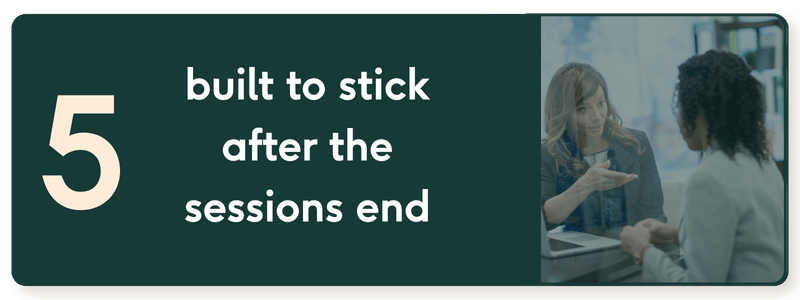
Reason 5: Built to stick after the sessions end. A leader and a team member talk across a table in a one-on-one conversation, applying resilience skills back at work.
Each leader leaves with no more than three focused goals, each tied to a specific upcoming situation with an IF/THEN plan, along with a pre- and post-program report.
1. Built for the unexpected
2. Goes beyond acceptance to action
3. Practiced on real pressure, starting with their own
4. Grounded in the science of stress
5. Built to stick after the sessions end

5 Reasons to Choose Building Resilience

Here are five core ways that this program is different from other resilience training programs on the market today.

1. Built for the unexpected

Some of the hardest changes are the ones an organization didn't plan for, such as a sudden market shift, geopolitical events that disrupt operations, or a crisis inside the company. This program prepares leaders to respond well in those moments, when there's no plan to follow and their team is watching how they react.

2. Goes beyond acceptance to action

Resilience isn't passive acceptance of whatever happens. Leaders learn to accept what they can't change so they can put their energy into what they can. They stay engaged in shaping what comes next and help their teams do the same.

3. Practiced on real pressure, starting with their own

Leaders apply the tools to challenges they're facing right now, including a real situation between sessions. Then they practice a supportive conversation with a struggling team member, drawing on what they experienced themselves.

4. Grounded in the science of stress

The program is built on Threat Detection Math: the brain's quick calculation of whether a demand outweighs the resources available to meet it. Research published in Nature by David Yeager and colleagues found that a short mindset intervention changed how people evaluated stressful demands and their ability to handle them.

5. Built to stick after the sessions end

Each leader leaves with no more than three focused goals, each tied to a specific upcoming situation with an IF/THEN plan, along with a pre- and post-program report.


What the Research Says

1.7x
Leaders are 1.7x more likely to experience high stress than individual contributors.
Source: McLean & Company, 2025.
76%
of employees experience burnout on the job
Source: Gallup.
62%
less likely to be burned out when employees' manager is always willing to listen to their work-related problems
Source: Gallup.

A 4-Week Blended Learning Journey

Building Resilience is offered as a blended learning program. Explore a suggested learning journey below, although implementation can be flexible to your organization's needs.

Pre-assessment

The Building Resilience pre-assessment sparks individual insights and enables the facilitator to personalize the live learning experience.

Time: ~15 minutes

Self-paced learning

A short microcourse, "Shift to a Challenge Response," introduces the program's core idea: how the brain decides whether a demand feels like a threat or a challenge.

Time: ~10 minutes

Live instructor-led learning

Live facilitated practice, delivered as two 2-hour sessions or a single half-day.

If split into two sessions, leaders apply the tools to a real challenge in between and bring what they learn to the second session.

Time: ~4 hours total

Post-assessment

The post-program assessment shows how each leader has grown, both for personal insight and to support program reporting toward business goals.

Time: ~15 minutes

A 4-Week Blended Learning Journey

Building Resilience is offered as a blended learning program. Explore a suggested learning journey below, although implementation can be flexible to your organization's needs.

  • Pre-assessment

    The Building Resilience pre-assessment sparks individual insights and enables the facilitator to personalize the live learning experience.

    Time: ~15 minutes

  • Self-paced learning

    A short microcourse, "Shift to a Challenge Response," introduces the program's core idea: how the brain decides whether a demand feels like a threat or a challenge.

    Time: ~10 minutes

  • Live instructor-led learning

    Live facilitated practice, delivered as two 2-hour sessions or a single half-day. If split into two sessions, leaders apply the tools to a real challenge in between and bring what they learn to the second session.

    Time: ~4 hours total

  • Post-assessment

    The post-program assessment shows how each leader has grown, both for personal insight and to support program reporting toward business goals.

    Time: ~15 minutes

1
2
3
4
INDIVIDUAL CONTRIBUTORS

Help Teams Adapt to Change

This program is also offered as a course for individual contributors, designed to help them adapt and increase their resilience as they face significant change.

Resilience training for individual contributors: two coworkers talk across a table with notebooks, one listening closely as the other speaks.


Frequently asked questions about Building Resilience
1. Who is Building Resilience designed for?

Frontline and midlevel managers who lead teams under sustained pressure, such as heavy workloads, unplanned disruptions, or back-to-back change.

2. Who facilitates the program?

You can choose. SIY Global's expert facilitators can deliver the live sessions for your organization, or you can train your own internal facilitators to deliver the program through our Facilitator Certification program.

3. Can the program be delivered virtually?

Yes. The live sessions can be delivered virtually or in person, as two 2-hour sessions or a single half-day. The self-paced learning and assessments are completed online, so the program works for distributed and global teams.

4. Can the program be tailored to our organization?

Yes. We regularly tailor the program to fit an organization's context. That can include scenarios that reflect your industry and culture, a different program length, or a different cohort size. Talk with us about what you need, and we'll shape the program around it.

5. How is this different from stress management or wellness training?

Most stress management training focuses on individual self-care. Building Resilience treats resilience as a leadership skill: leaders learn to manage their own response under pressure and to support their teams through it. It is designed to complement, not replace, the well-being resources your organization already offers.

6. How much does the program cost?

Pricing varies based on the number of participants and cohorts, the delivery format, facilitation, and any tailoring. Talk with us about your goals, and we'll put together options that fit your organization.

7. Do leaders need to complete another SIY Global program first?

No. Many organizations start with Leading with Emotional Dynamics™, SIY Global's foundational emotional intelligence program for leaders, but Building Resilience can be run on its own.

8. What is Threat Detection Math?

Threat Detection Math is the core idea behind this program. When a change or demand shows up, the brain quickly weighs it against the resources it believes are available. If the demand seems to outweigh those resources, people tend toward a threat response. If the resources seem sufficient, they tend toward a challenge response, with more focus and energy. The program teaches leaders to shift that calculation for themselves and their teams.