
PSYCHOLOGICAL SAFETY TRAINING FOR LEADERS

Creating High-Trust Teams

Equip leaders to build the psychological safety, clarity, and learning habits that high-performing teams depend on
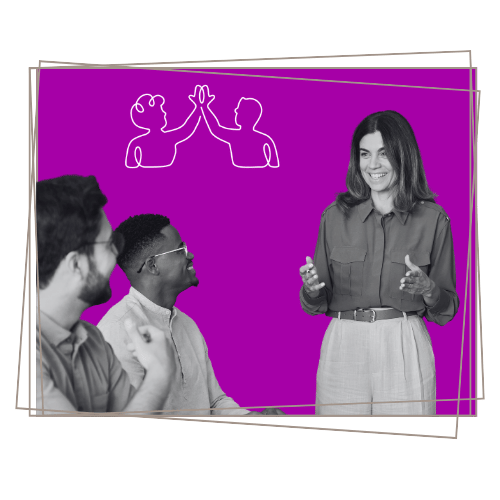
Psychological safety training for leaders: a smiling leader talks with two team members who laugh and respond openly in a meeting.

Build teams where people contribute to their full capability

Trust is built or lost in everyday moments: how a leader listens, runs a meeting, clarifies a decision, or responds to a mistake. This program gives leaders a practical way to spot where trust is slipping on their team and strengthen it.


Audience
Frontline and midlevel managers who lead teams
Length
5-week learning journey,
flexible options
Live learning
4 hours
Cohort size
24 to 30 participants

PARTICIPANT FEEDBACK
“I appreciate the self-awareness aspects of the program, which is so often the missing link in conversations/topics like this. We often want to jump right to how to ‘fix’ other people without thinking about ourselves.”

-Participant, Open-enrollment program


What’s Different About This Program

Here are four core ways that this program is different from other psychological safety training programs on the market today.
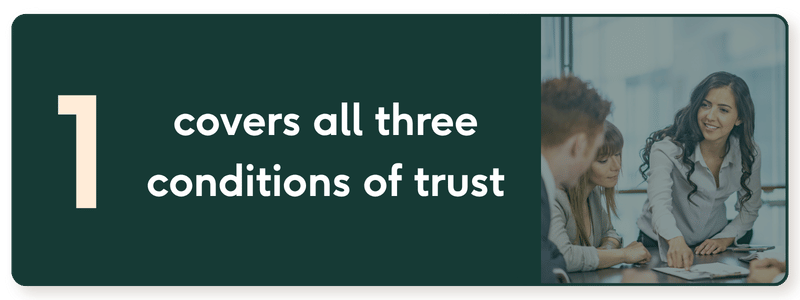
Reason 1: Covers all three conditions of trust. A team leader smiles as she reviews documents with colleagues around a meeting table.
Psychological safety is the foundation, but safety alone doesn’t make a team effective. The Trust Triangle adds Clarity & Alignment and Growth & Adaptation, so leaders also work on whether agreement turns into action and whether the team learns from mistakes.
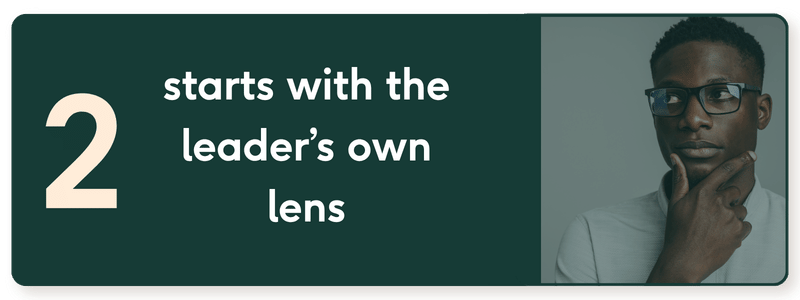
Reason 2: Starts with the leader’s own lens. A man in glasses rests his chin on his hand, reflecting on his own point of view.
Before working on the team, leaders explore the Perception BoxTM: how their own experiences and assumptions shape what they notice on their team and the signals they send.
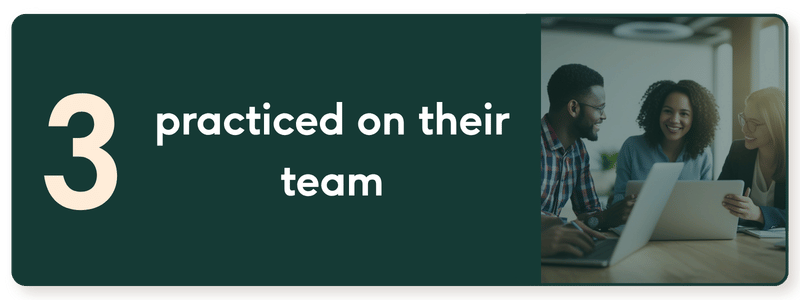
Reason 3: Practiced on their team. Three colleagues smile as they work through a real project together at their laptops.
Leaders reflect on signals from their own team, run a Clarity Calibration on a real project, and prepare an example of the TEST model to share with their team. Between sessions, they observe their team and bring what they notice back.
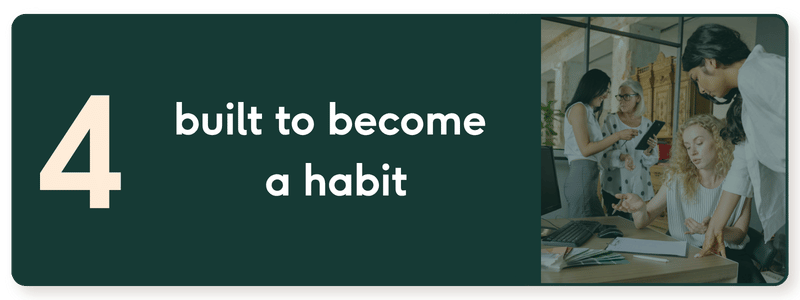
Reason 4: Built to become a habit. Colleagues gather around a desk to share ideas as part of their everyday work.
After the live sessions, a three-week application challenge delivers short practice prompts three times a week, one dimension per week. A post-assessment shows each leader’s progress.
1. Covers all three conditions of trust
2. Starts with the leader’s own lens
3. Practiced on their own team
4. Built to become a habit

4 Reasons to Choose Creating High-Trust Teams

Here are four core ways that this program is different from other psychological safety training programs on the market today.

1. Covers all three conditions of trust

Psychological safety is the foundation, but safety alone doesn’t make a team effective. The Trust Triangle adds Clarity & Alignment and Growth & Adaptation, so leaders also work on whether agreement turns into action and whether the team learns from mistakes.

2. Starts with the leader’s own lens

Before working on the team, leaders explore the Perception BoxTM: how their own experiences and assumptions shape what they notice on their team and the signals they send.

3. Practiced on their own team

Leaders reflect on signals from their own team, run a Clarity Calibration on a real project, and prepare an example of the TEST model to share with their team. Between sessions, they observe their team and bring what they notice back.

4. Built to become a habit

After the live sessions, a three-week application challenge delivers short practice prompts three times a week, one dimension per week. A post-assessment shows each leader’s progress.


What the Research Says

26%
of leaders create psychological safety for their teams
Source: McKinsey, 2021.
2x
Teams with higher psychological safety were rated as effective twice as often by executives
Source: Google, Project Aristotle.
7,758
teams in a meta-analysis that linked team learning behaviors, such as reflecting, sharing feedback, and experimenting, to higher team performance
Source: Wiese et al., 2022.

A 5-Week Blended Learning Journey

Creating High-Trust Teams is offered as a blended learning program. Explore a suggested learning journey below, although implementation can be flexible to your organization’s needs.

Self-paced learning

Three microcourses, “The Foundations of Trust,” “Inside the Trust Triangle,” and “Leader Impact & the Perception BoxTM,” introduce the program’s model and the leader’s role in shaping trust.

Time: ~10 minutes each

Live instructor-led learning

Facilitated practice, delivered as two 2-hour sessions or a single 4-hour session.

If split into two sessions, leaders observe their own team in between and bring what they notice to the second session.

Time: ~4 hours total

Application challenge

Three weeks of short practice sessions that focus on one dimension of the Trust Triangle each week.

Time: ~30 minutes per week

Post-assessment

The post-assessment measures each leader’s progress in the course and supports program reporting toward business goals.

Time: ~15 minutes

A 5-Week Blended Learning Journey

Creating High-Trust Teams is offered as a blended learning program. Explore a suggested learning journey below, although implementation can be flexible to your organization’s needs.

  • Self-paced learning

    Three microcourses, “The Foundations of Trust,” “Inside the Trust Triangle,” and “Leader Impact & the Perception BoxTM,” introduce the program’s model and the leader’s role in shaping trust.

    Time: ~10 minutes each

  • Live instructor-led learning

    Facilitated practice, delivered as two 2-hour sessions or a single 4-hour session. If split into two sessions, leaders observe their own team in between and bring what they notice to the second session.

    Time: ~4 hours total

  • Application challenge

    Three weeks of short practice sessions that focus on one dimension of the Trust Triangle each week.

    Time: ~30 minutes per week

  • Post-assessment

    The post-assessment measures each leader’s progress in the course and supports program reporting toward business goals.

    Time: ~15 minutes

1
2
3
4
INDIVIDUAL CONTRIBUTORS

Build Trust Across the Whole Team

This program is also offered as a course for individual contributors, so everyone on the team shares the same language for trust and practices the habits that support it.
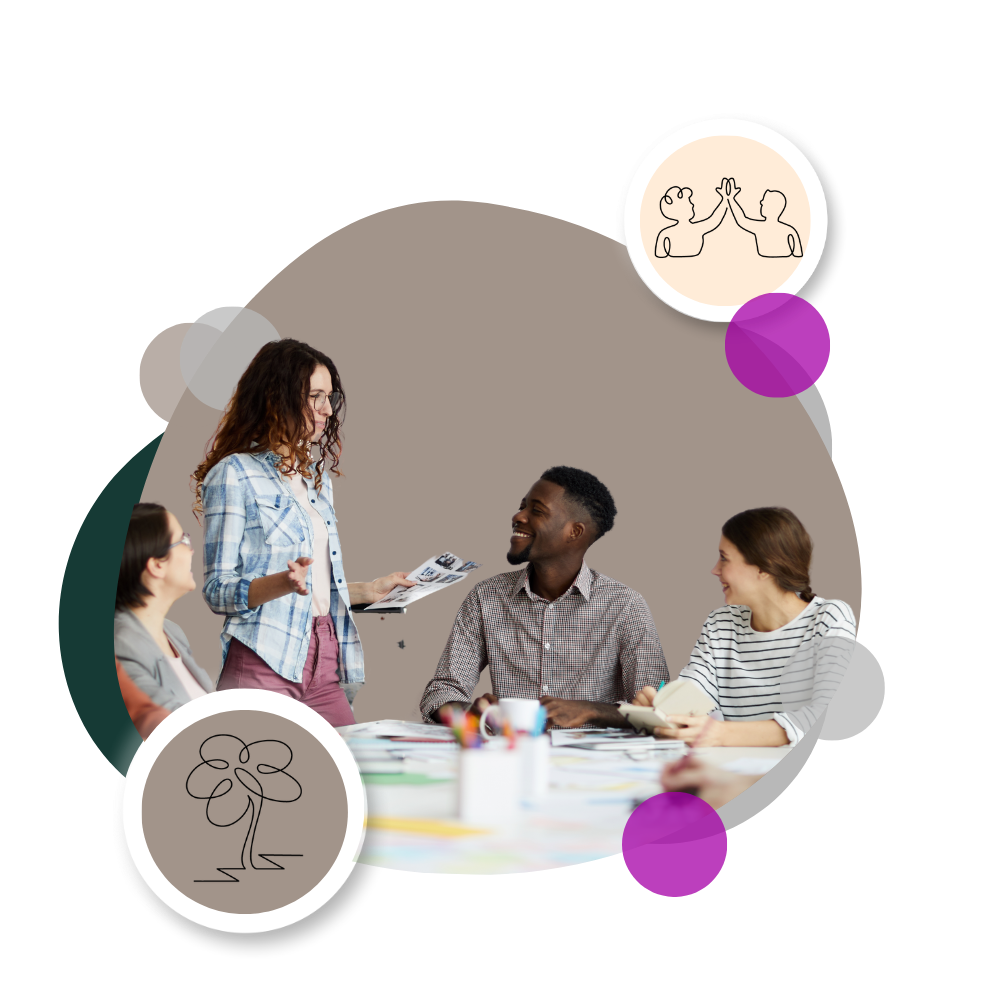
Trust training for individual contributors: four colleagues laugh and talk openly around a table during a team discussion.


Frequently asked questions about Creating High-Trust Teams
1. Who is Creating High-Trust Teams designed for?

Frontline and midlevel managers who want a team where people speak up, stay aligned, and learn from mistakes, whether they lead a new team or an established one.

2. Who facilitates the program?

You can choose. SIY Global’s expert facilitators can deliver the live sessions for your organization, or you can train your own internal facilitators to deliver the program through our Facilitator Certification program.

3. Can the program be delivered virtually?

Yes. The live sessions can be delivered virtually or in person, as two 2-hour sessions or a single 4-hour session. The self-paced learning, practice prompts, and assessment are completed online, so the program works for distributed and global teams.

4. Can the program be tailored to our organization?

Yes. We regularly tailor the program to fit an organization’s context. That can include scenarios that reflect your industry and culture, a different program length, or a different cohort size. Talk with us about what you need, and we’ll shape the program around it.

5. How is this different from other psychological safety training?

This program uniquely pulls in the Perception BoxTM, which helps leaders to understand how their own perceptions and framing can influence how they build trust with others.

In addition, Creating High-Trust Teams goes beyond teaching only psychological safety, including it as one of three conditions that build trust, alongside clarity and a learning culture.

6. How much does the program cost?

Pricing varies based on the number of participants and cohorts, the delivery format, facilitation, and any tailoring. Talk with us about your goals, and we’ll put together options that fit your organization.

7. Do leaders need to complete another SIY Global program first?

No. Many organizations start with Leading with Emotional Dynamics™, SIY Global’s foundational emotional intelligence program for leaders, but Creating High-Trust Teams can be run on its own.

8. What is psychological safety?

Psychological safety is a shared belief on a team that it’s safe to take interpersonal risks, such as asking a question, raising a concern, or admitting a mistake, without fear of embarrassment or punishment. The concept comes from the research of Harvard Business School professor Amy Edmondson.