
LEADERSHIP PROGRAM FOR MANAGING A MULTIGENERATIONAL WORKFORCE

Managing Across Generations

Equip leaders to unlock the full contribution of a multigenerational team
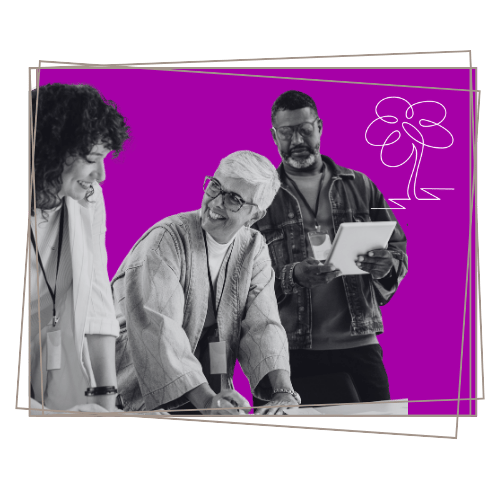
Colleagues from three generations working together at a table, one holding a tablet, on a purple background

Help leaders get the best from every generation

Up to five generations now work side by side, and the assumptions each holds about the others shape who gets heard, trusted, and handed the stretch assignment.

This program helps leaders catch those assumptions, replace them with curiosity, and build a team where every generation contributes fully.


Audience
Frontline and midlevel leaders of multigenerational teams
Length
4-week learning journey,
flexible options
Live learning
4 hours
Cohort size
24 to 30 participants

EXPERT PERSPECTIVE
"Different generations have the same core values at work, but they often have different ideas about how to express those values and fulfill those values."

-Adam Grant, organizational psychologist, on the TED podcast WorkLife


What's Different About This Program

Here are five core ways that this program is different from other multigenerational workforce training on the market today.
Reason 1: Generation as a lens, not a label. An older woman with glasses works at a laptop.
Most multigenerational training teaches what each generation is like. This program treats generational patterns as useful context, never as a description of any one person. Leaders learn to check their assumptions against the individual in front of them.
Reason 2: Built on the Perception Box™. A man sits at a desk, deep in thought.
Everyone carries predictions about other people, shaped by their era, upbringing, and experience. Leaders learn to notice when one of those predictions about a colleague's generation is standing in for the facts, and to replace it with a question.
Reason 3: Grounded in group dynamics research. Colleagues of different ages review work on a laptop together.
Neuroscience research shows empathy drops when we see someone as part of a different group, and returns when we focus on what we share. A study of 222 work teams found age diversity was linked to stronger performance on complex decision-making work.
Reason 4: Practiced with the team. A team of colleagues talks and laughs around a shared desk.
Between sessions, leaders track the stories they tell about colleagues in real meetings. In the second session, they lead a simulated cross-generational team meeting, drawing out balanced input and keeping disagreement focused on the work.
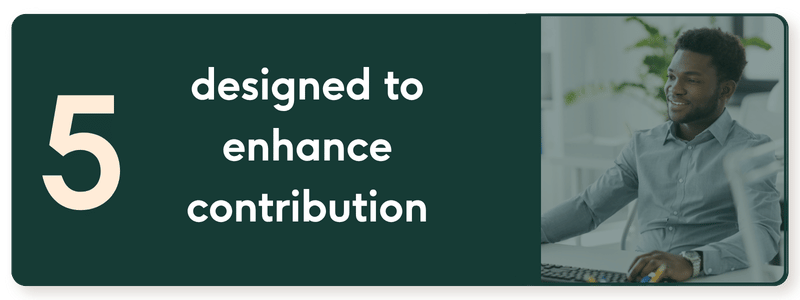
Reason 5: Designed to enhance contribution. A smiling man works at a computer.
Understanding other generations is the starting point. Leaders leave with a three-part approach to set clear expectations, draw out every voice, and reinforce learning, so the whole team contributes.
1. Generation as a lens, not a label
2. Built on the Perception Box™
3. Grounded in group dynamics research
4. Practiced with the team
5. Designed to enhance contribution

5 Reasons to Choose Managing Across Generations

Here are five core ways that this program is different from other multigenerational workforce training on the market today.

1. Generation as a lens, not a label

Most multigenerational training teaches what each generation is like. This program treats generational patterns as useful context, never as a description of any one person. Leaders learn to check their assumptions against the individual in front of them.

2. Built on the Perception Box™

Everyone carries predictions about other people, shaped by their era, upbringing, and experience. Leaders learn to notice when one of those predictions about a colleague's generation is standing in for the facts, and to replace it with a question.

3. Grounded in group dynamics research

Neuroscience research shows empathy drops when we see someone as part of a different group, and returns when we focus on what we share. A study of 222 work teams found age diversity was linked to stronger performance on complex decision-making work.

4. Practiced with the team

Between sessions, leaders track the stories they tell about colleagues in real meetings. In the second session, they lead a simulated cross-generational team meeting, drawing out balanced input and keeping disagreement focused on the work.

5. Designed to enhance contribution

Understanding other generations is the starting point. Leaders leave with a three-part approach to set clear expectations, draw out every voice, and reinforce learning, so the whole team contributes.


What the Research Says

40%+
of workers in every generation say employers hold untrue perceptions about their generation
Source: iHire, 2025.
44%
of Gen Z office workers say older co-workers have criticized them because of generational stereotypes
Source: Kahoot!/OnePoll, UK, 2025.
222 teams
studied, and age diversity was linked to stronger performance on complex decision-making work
Source: Wegge et al., Journal of Applied Psychology, 2008.

A 4-Week Blended Learning Journey

Managing Across Generations is offered as a blended learning program. Explore a suggested learning journey below, although implementation can be flexible to your organization's needs.

Pre-assessment

The Managing Across Generations pre-assessment sparks individual insights and enables the facilitator to personalize the live learning experience.

Time: ~15 minutes

Self-paced learning

Two short microcourses, "The Multi-Generational Advantage" and "Empathy Across Generations," introduce the program's core ideas before the live sessions.

Time: ~20 minutes

Live instructor-led learning

Live facilitated practice, delivered as two 2-hour sessions. A half-day format is available on request.

Between sessions, leaders reflect on their own interactions with colleagues from other generations and bring what they notice to the second session.

Time: ~4 hours total

Post-assessment

The post-program assessment shows how each leader has grown, both for personal insight and to support program reporting toward business goals.

Time: ~15 minutes

A 4-Week Blended Learning Journey

Managing Across Generations is offered as a blended learning program. Explore a suggested learning journey below, although implementation can be flexible to your organization's needs.

  • Pre-assessment

    The Managing Across Generations pre-assessment sparks individual insights and enables the facilitator to personalize the live learning experience.

    Time: ~15 minutes

  • Self-paced learning

    Two short microcourses, "The Multi-Generational Advantage" and "Empathy Across Generations," introduce the program's core ideas before the live sessions.

    Time: ~20 minutes

  • Live instructor-led learning

    Live facilitated practice, delivered as two 2-hour sessions. A half-day format is available on request. Between sessions, leaders reflect on their own interactions with colleagues from other generations and bring what they notice to the second session.

    Time: ~4 hours total

  • Post-assessment

    The post-program assessment shows how each leader has grown, both for personal insight and to support program reporting toward business goals.

    Time: ~15 minutes

1
2
3
4
INDIVIDUAL CONTRIBUTORS

Help Every Generation Work Better Together

This program is also offered as a course for individual contributors, designed to help them understand colleagues from other generations and contribute fully on a multigenerational team.
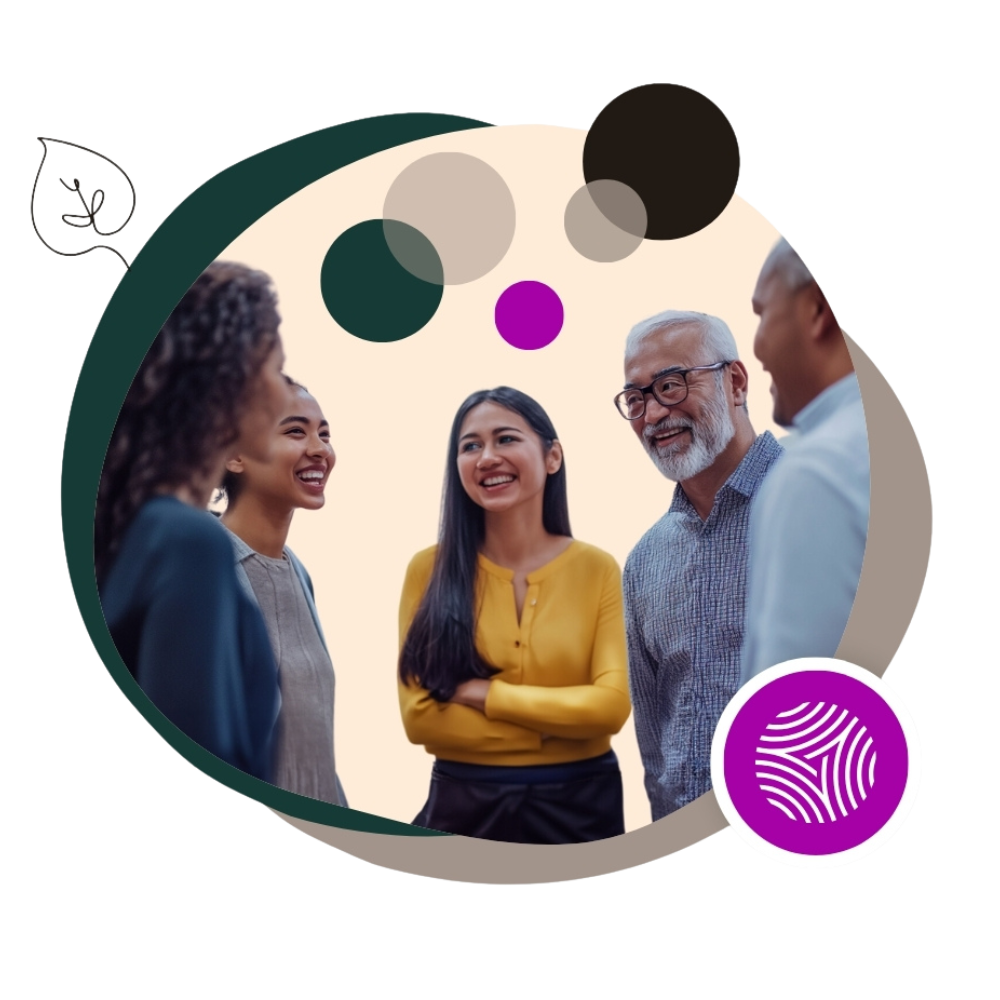
Colleagues of different generations laughing together in conversation


Frequently asked questions about Managing Across Generations
1. Who is Managing Across Generations designed for?

Frontline and midlevel leaders who manage teams that span several generations, from early-career employees to colleagues with decades of experience.

2. Who facilitates the program?

You can choose. SIY Global's expert facilitators can deliver the live sessions for your organization, or you can train your own internal facilitators to deliver the program through our Facilitator Certification program.

3. Can the program be delivered virtually?

Yes. The live sessions can be delivered virtually or in person, as two 2-hour sessions, and a half-day format is available on request. The self-paced learning and assessments are completed online, so the program works for distributed and global teams.

4. Can the program be tailored to our organization?

Yes. We regularly tailor the program to fit an organization's context. That can include scenarios that reflect your industry and culture, a different program length, or a different cohort size. Talk with us about what you need, and we'll shape the program around it.

5. What skills do leaders need for managing a multigenerational workforce?

Leaders need to notice the assumptions they make about other generations, understand where each person is coming from, and draw out contribution from everyone on the team. This program builds those skills through practice on real team situations, not through generational profiles.

6. How does the program handle generational research, given the care needed around stereotyping?

The program is built with that care in mind. Generational patterns show up across large groups, but they don't predict any one person. Leaders learn to use generation as a lens that points to better questions, not as a label for the people on their team.

7. What is the Perception Box™?

The Perception Box™ is the set of predictions each of us carries about the world and the people in it, built from our era, upbringing, culture, and experience. In this program, leaders learn to notice when a prediction about a colleague's generation is standing in for the facts.

8. How much does the program cost?

Pricing varies based on the number of participants and cohorts, the delivery format, facilitation, and any tailoring. Talk with us about your goals, and we'll put together options that fit your organization.

9. Do leaders need to complete another SIY Global program first?

No. Many organizations start with Leading with Emotional Dynamics™, SIY Global's foundational emotional intelligence program for leaders, but Managing Across Generations can be run on its own.